You have watched enough renovation shows to know the drill. Sledgehammer swings, the wall comes down, dust settles, and commercial break. Thirty minutes later, the room is gutted and the crew is sweeping up. Real life, of course, is not a television show.
Your kitchen has been half torn apart for three weekends now. The tile backsplash is scattered across the driveway. And somewhere under a pile of drywall dust, you lost your keys. Twice. You just want to know one thing. When will this end?
Here is the truth. How long does light demolition take depends on a lot more than how hard you swing a hammer. Permitting, prep work, debris hauling, and the nasty surprises behind your walls all eat up time. But once you understand the process, you can stop guessing and start planning.
Before we talk timelines, let us get clear on what we are actually discussing.
Light demolition is not the same as leveling a house. You are not bringing in bulldozers or watching excavators punch through concrete foundations. This is smaller scale. More precise. And often, more common for homeowners.
Think of light demolition work as removing the stuff inside a building without taking down the building itself. Examples include:
Selective demolition is a term you will hear often. It means taking only what needs to go and leaving the rest intact. You are not gutting the whole house. Just the parts that are changing. On the other hand, large-scale demolition is the opposite. That is the full tear-down; the whole house coming down. That takes longer, costs more, and involves a different set of rules.
For most homeowners planning a renovation, light demolition is what you need. And the good news? It moves faster than you think. The not so good news? The stuff around it can slow you down.
Let us cut to the chase. How many days will this take?
Well, the physical act of light demolition usually takes 1 to 5 days. A single bathroom? One to two days. A full kitchen? Two to three days. An entire floor of a house? Three to five days.
But that is just the swinging the hammer part. The complete timeline from planning to cleanup is longer. Here is the average time for light demolition when you factor in everything:
Add it up and a light demolition timeline can stretch from one week to a full month, depending on your specific situation.
Just for perspective, how long does a total tear-down take? A full house demolition typically runs 2 to 6 weeks start to finish. That is a different beast. More permits, heavier equipment, and bigger debris piles.
For light demolition, you are looking at the faster end of the spectrum. But fast is relative, and a weekend project is rarely just a weekend.
Let us walk through exactly what happens from the day you decide to tear stuff out to the moment your contractor shows up to start building.
This is the part everyone forgets. You cannot just start swinging a hammer. Well, you can. But you might regret it.
Some cities require permits even for interior demolition, especially if you are moving walls or touching electrical or plumbing. Pulling a permit takes time. Applications. Fees. Waiting for approval. In some places, that is a few days. In others, it is a month.
During this phase, you also need to figure out logistics. Where will the debris go? Do you need a dumpster? Who is hauling it away? Answer these questions before you make a mess, not after.
Before any wall comes down, the space needs to be ready. Furniture moves out. Flooring gets protected. Dust barriers go up if you are living in the house during the work.
Then come the utilities. Electricity, gas, and water lines feeding into the demolition area must be shut off or capped. This sounds simple, but scheduling utility companies can take days. Some require a week of notice. If you are in a multi unit building like a condo or apartment, coordinating shutoffs gets even more complicated.
The duration for light demolition often stretches here because people underestimate how long it takes to get a plumber or electrician out just for disconnections.
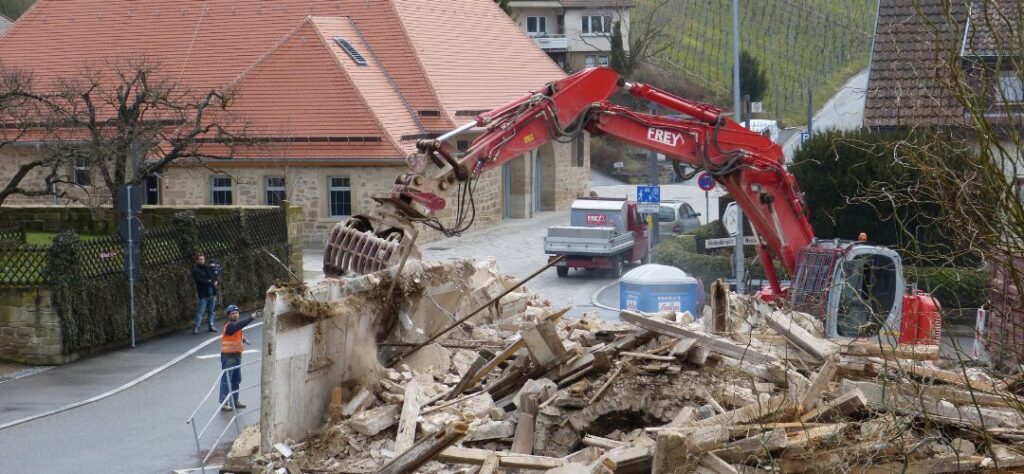
Finally, the part you have been waiting for. The part where walls come down, cabinets get ripped out, flooring gets torn up, and tile gets smashed. This is where light demolition work looks like what you see on television.
A small bathroom can be gutted in a single day. A full kitchen takes two to three days. An entire floor of a house might need five days, especially if there is tile, plaster, or multiple layers of old flooring.
How long does it take to demolish a building at this stage depends entirely on what you are tearing out. For instance, drywall comes down fast. Lath and plaster is slow and dusty. Tile over concrete requires a chipping hammer and patience. Wood framing is somewhere in the middle.
Crew size is equally important. Two people working a bathroom is plenty. Gutting a whole floor might need four or five.
The dust settles and the walls are gone. Now you have a mountain of debris where your kitchen used to be.
Debris removal is not instant. Everything must be hauled out, loaded into a truck or dumpster, and driven away. Concrete, tile, and plaster are heavy, while drywall is bulky and wood needs sorting if it can be recycled.
For a typical room, cleanup takes a day. For a whole house interior gut, plan on two to three days just for hauling.
Once the debris is gone, the space is not ready for construction yet. The subfloor may need cleaning, the studs may need inspection, and the area might need a final sweep and vacuum to remove fine dust that settled everywhere.
This phase often gets overlooked, but skipping it means your new insulation, drywall, or flooring goes over a dirty, uneven surface. That causes problems later.
The good news? Professional light demolition services include this final cleanup so your contractor can start building immediately.
You have the phases down. Now let us talk about the variables that can turn a one week demo into a three week headache.
Not all demolition is created equal. Mechanical demolition using power tools and heavy equipment is fast. A crew with jackhammers and reciprocating saws can tear through a bathroom in hours. But if you are doing selective demolition where you are carefully saving cabinets, trim, or flooring for reuse, expect things to slow down.
What affects demolition time the most often comes down to what is actually in your walls and floors.
Why does demolition take so long when you hit these materials? Because you cannot rush without damaging the structure underneath. Slow means safe. Fast means broken pipes and cracked studs.
How easy is it to get debris out? A ground floor room with a door to the driveway? Fast. A third floor walk up apartment with narrow stairs and a long hallway? Slow. Every trip up and down stairs adds minutes that turn into hours.
Here is the wildcard. Asbestos. Lead paint. Mold. You cannot just tear into walls if these are present. Testing takes time and abatement takes even more. A week for testing, another week for professional removal, and your simple demo is now a month-long ordeal.
A light demolition service with experienced crews will always be faster than a solo homeowner with a borrowed hammer. Professionals know where to cut, how to load debris efficiently, and what to watch for behind walls. They also have the right tools. A sledgehammer is great for frustration but a demo saw is better for speed.
You budgeted three days but here you are on day eight. What actually happened?
You thought you could start swinging a hammer the day you decided to renovate, but the city thinks otherwise. Permit approvals take time. Some municipalities process in a few days. Others take weeks. Historic districts add even more red tape.
You pull off drywall expecting to find simple studs, instead, you find knob and tube wiring. Or cast iron plumbing that needs professional removal. Or a mouse hotel that requires hazmat level cleanup.
Shutting off gas, water, and electricity sounds simple. Call the utility company, schedule a disconnect, done. But some utilities require a week of notice. Some charge fees, some only send technicians on certain days. Miss your window and you wait another week.
Demolition in July is hot but predictable. Demolition in February brings frozen pipes, snow covered debris, and crews who cannot work in unsafe conditions. Rain delays outdoor debris sorting while extreme cold makes tools sluggish and workers miserable.
A crew of two takes twice as long as a crew of four, but you cannot always get four, can you?. Good demolition crews are booked weeks in advance, so, if your timeline is tight, you might have to wait for availability.
Last minute changes kill schedules. “While you are in there, can you also take out that closet?” Yes, but that adds half a day, two changes add a full day, and by the fifth change, your one week demo is now two.
Light demolition takes 1 to 5 days for the physical work, but the full timeline including permits, prep, and cleanup runs 1 to 4 weeks. Material type, site access, hidden hazards, and utility coordination all affect speed. A bathroom gut takes a day. A whole floor takes longer. Plan for surprises and you will not be caught off guard.
If you want a demolition that stays on schedule without the headaches, let us handle it. Rivas Rubbish Removal provides professional light demolition services with a team of experts who keep you updated every step of the way, so you know exactly how long the work will take. Call us at +1 (781) 244-7661 or visit https://rivasrubbishremovals.com/light-demolition/ to learn more.
Yes, small projects like a single bathroom or minor wall removal can often be finished in one day, depending on complexity and crew size.
The physical teardown is usually the fastest part; preparation and cleanup often take longer than expected.
It depends on your location and the scope of work. Removing non-structural elements may not require permits, but electrical, plumbing, or wall changes often do.
Hidden issues like asbestos, old wiring, plumbing complications, and permit delays are the most common causes of delays.
Yes, professionals complete demolition much faster due to experience, proper tools, and efficient debris handling.
Reach out to Rivas Rubbish Removal today for fast, reliable, and eco-friendly rubbish removal services. We’ll help you clear your space efficiently while ensuring sustainable practices for a cleaner, greener environment.
Have questions or need assistance? Our team is here to help – don’t hesitate to reach out.