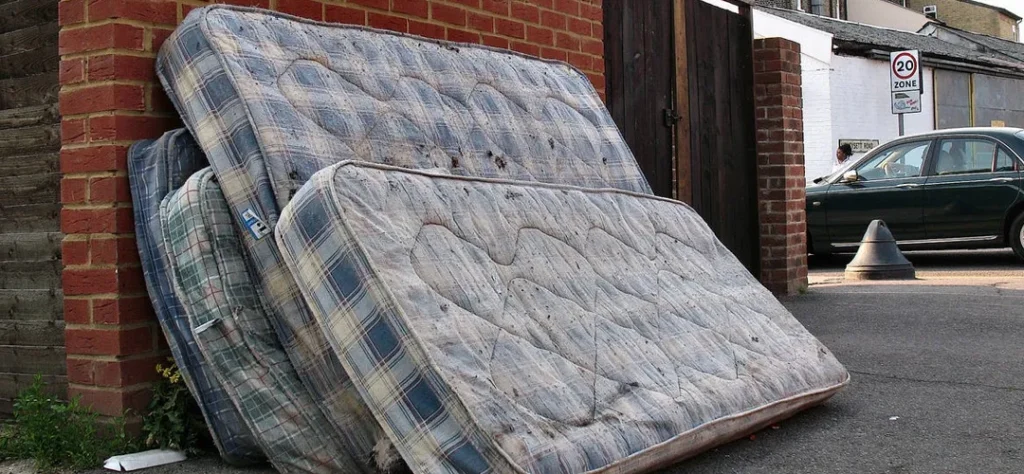
You finally did it. The new mattress arrived, the old one got hauled away, and your bedroom feels like a fresh start. But late that night, a question hits you. Where did that old mattress actually go? Did it end up in a landfill, or did someone give it a second life?
Here is the thing. Most people schedule an old mattress removal and never think about it again. But what happens to an old mattress after the truck drives away is actually a fascinating journey. Some get recycled into carpet padding and new steel. Others sit in dumps for decades. And a few lucky ones get donated to someone who truly needs them.
This guide walks you through exactly where your mattress goes after pickup, what happens inside a recycling facility, and how to make sure your mattress disposal choice is the right one for the planet.
You might be tempted to drag your old mattress to the curb on garbage day and call it done. Bad idea. In most cities, regular trash trucks will not take it. And if you leave it there anyway, you could wake up to a fine instead of an empty street.
Is it illegal to throw away a mattress? The answer depends on where you live, but many states have made it illegal to send mattresses to landfills. Why? Because a single mattress takes up to 40 cubic feet of space, refuses to compact like normal trash, and can take 80 to 120 years to break down. Landfills cannot handle millions of them every year.
Now, what about the clever workaround? Can you cut up a mattress and put it in a dumpster? Technically, you could. But here is the catch. Most dumpster rental companies prohibit mattresses entirely. Even cut up, the steel springs and foam create disposal headaches. And if you get caught sneaking one in, you will pay extra fees or have your dumpster rejected. Not worth the hassle.
The bottom line? Your mattress needs a real plan, not a trash can shortcut. Let us look at what actually works.
Before we dive into what happens after pickup, let us quickly cover how to actually remove mattress from your home in the first place. You have several choices, and the right one depends on your budget, timeline, and how much effort you want to put in.
Buying a new mattress? Many stores offer to take your old one when they deliver. This is the easiest option. You do nothing except point at the old bed.
Some cities schedule bulky item collection days. Call your sanitation department and ask. Just know that “pickup” does not always mean “recycled.” Some municipalities still send mattresses straight to the dump.
Search for mattress recycling centers near you. Load up your old bed, drive it over, and drop it off. Often costs a small fee, but you know exactly where it is going.
This is the hands off approach. A truck shows up, hauls the mattress away, and handles everything. The key question is whether they recycle or just dump it. We will get to that in a moment.
Now that you know how to get rid of it, let us follow that mattress on its actual journey.
The truck drives away. You wave goodbye. Now the real story begins. What happens to your mattress after it is picked up for disposal depends entirely on who picked it up and where they take it.
Here are the three possible destinations.
This is where most of the magic happens. Your mattress gets taken apart piece by piece. Steel springs go to scrap metal processors. Foam becomes carpet padding. Wood gets chipped into mulch or biomass fuel. Up to 90% of the mattress finds a new life.
If your mattress is in excellent condition, no stains, no sagging, no weird smells, it might get cleaned and donated to a charity or furniture bank. Someone who needs a bed gets one for free.
Where do mattress removal companies throw them away? Some haulers still take mattresses straight to the dump. There, the mattress joins millions of others, taking up space and refusing to decompose for decades. That is why asking questions before you hire matters.
So how do you know which path your mattress takes? Let us walk through the mattress disposal process step by step so you can see exactly what happens at a recycling facility.
Let us open the doors of a recycling facility and follow one mattress from drop off to full disassembly. This is the step by step mattress disposal process explained in plain language.
Whether a mattress pickup service brought it or you dropped it off yourself, the mattress arrives at a facility. Often, it gets bagged or wrapped first. This prevents bed bugs, dust, or mold from spreading during transport. A simple plastic sleeve makes a big difference.
Workers inspect every mattress that comes through the door. They check for condition, contamination, and type. A mattress that is nearly new and stain free might get set aside for donation. A heavily soiled or damaged one heads straight to disassembly. This is also where they identify what kind of mattress it is. Innerspring? Memory foam? Hybrid? Each type breaks down differently.
Here is where the real work happens. Technicians use specialized tools to cut around the perimeter of the mattress. They peel back layers of fabric, foam, and cotton like opening a book. Steel springs get pulled out as one unit or in sections. An experienced team can fully disassemble a mattress in 6 to 10 minutes. That is faster than you probably expected.
Once the mattress is torn apart, each component goes into its own pile. Steel here. Foam there. Fabric in that bin. Wood from box springs in another. This is where foam and spring recycling begins in earnest. Clean separation matters because each material goes to a different processor.
Now the real transformation happens. Steel springs get compressed into bales and sold to scrap metal processors. They get melted down into rebar, car parts, or new appliances. Foam gets shredded and rebonded into carpet padding, insulation, or pet beds. Wood gets chipped into mulch or biomass fuel. Even the fabric finds a second life as industrial wiping rags or sound deadening material.
What happens to old mattresses at the end of this line? They disappear. Not into thin air, but into useful products you interact with every day. That carpet you walk on? Might have been a mattress last year.
This is the question that surprises most people. What parts of a mattress can be recycled, almost all of it. Up to 90% of a typical mattress can be recovered and turned into something new.
Here is the breakdown.
Steel Springs. The metal coils inside an innerspring mattress are highly recyclable. A single mattress contains 25 to 30 pounds of steel. Once separated, the steel gets compressed into bales, sent to scrap processors, and melted down. That steel becomes rebar for construction, parts for new cars, or even new mattress springs.
Polyurethane Foam. The soft foam layers in most mattresses get shredded and rebonded. That recycled foam turns into carpet padding (the cushion under your feet), furniture padding, insulation, and filling for pet beds. Memory foam follows a similar path, often ending up in pillow fill or packaging materials.
Latex Foam. Natural latex foam is tougher to recycle than synthetic foam, but it can be done. Shredded latex becomes mulch for landscaping, playground surfaces, or animal bedding.
Cotton and Natural Fibers. The soft batting inside a mattress is often cotton or wool. These fibers get cleaned and processed into industrial rags, insulation material, or automotive sound deadening.
Wood From Box Springs. Box springs contain wooden frames. That wood is separated, chipped, and turned into landscape mulch or biomass fuel for industrial boilers.
Fabric coverings. The outer ticking fabric gets processed through textile recyclers. Depending on the material blend, it becomes industrial wiping rags, upholstery backing, or lower grade textile products.
So when you ask, “can you recycle a mattress after pickup service?”, the answer is yes, absolutely. But only if the service you hired actually sends mattresses to a recycling facility instead of a landfill.
Your old mattress does not have to die in a landfill. Most of it can be recycled into steel, foam padding, wood mulch, and fabric rags. The journey from your bedroom to a recycling facility takes less than an hour of disassembly time. But it only happens if you choose a hauler that actually recycles instead of dumping.
Not everyone wants to wrestle a queen size mattress into a pickup truck. That is fine. At Rivas Rubbish Removal, we specialize in mattress removal services that prioritize recycling and keeping waste out of landfills.
What happens to an old mattress after removal?
Most mattresses are either recycled, donated if in good condition, or sent to a landfill. Recycling is the most common eco-friendly option.
Are mattresses actually recycled after pickup?
Yes, many are recycled. Up to 90% of a mattress can be separated into steel, foam, wood, and fabric for reuse.
Do mattress removal companies throw mattresses away?
Some do, but many reputable services send them to recycling facilities instead of landfills.
Can a mattress be donated instead of recycled?
Yes, but only if it is clean, undamaged, and meets donation standards. Most worn mattresses cannot be donated.
What parts of a mattress can be recycled?
Steel springs, foam, wood frames, cotton, and fabric can all be recycled into new materials or products.
Reach out to Rivas Rubbish Removal today for fast, reliable, and eco-friendly rubbish removal services. We’ll help you clear your space efficiently while ensuring sustainable practices for a cleaner, greener environment.
Have questions or need assistance? Our team is here to help – don’t hesitate to reach out.