You are finally gutting that outdated kitchen, and the old cabinets and tile have to go. But here is the question that stops you. Do you tear down everything, or just the parts that need replacing? Picking wrong could blow your budget and extend your timeline by weeks, so understanding what is light demolition versus a full tear down matters more than you think.
Light demolition is the surgical approach that focuses on removing specific areas like a non load bearing wall, old flooring, or a basement full of junk without touching the rest of your house. Full structure demolition is the opposite, where everything comes down including the foundation, which most homeowners do not actually need for a standard remodel.
This guide breaks down light demolition vs full demolition across five key differences including scope, equipment, cost, permits, and how long each one takes. By the end, you will know exactly which path fits your project.
Before you hire anyone or pick up a sledgehammer, you need to know the answer to what are the two main types of demolition. They sit on opposite ends of the spectrum, and confusing them is an expensive mistake.
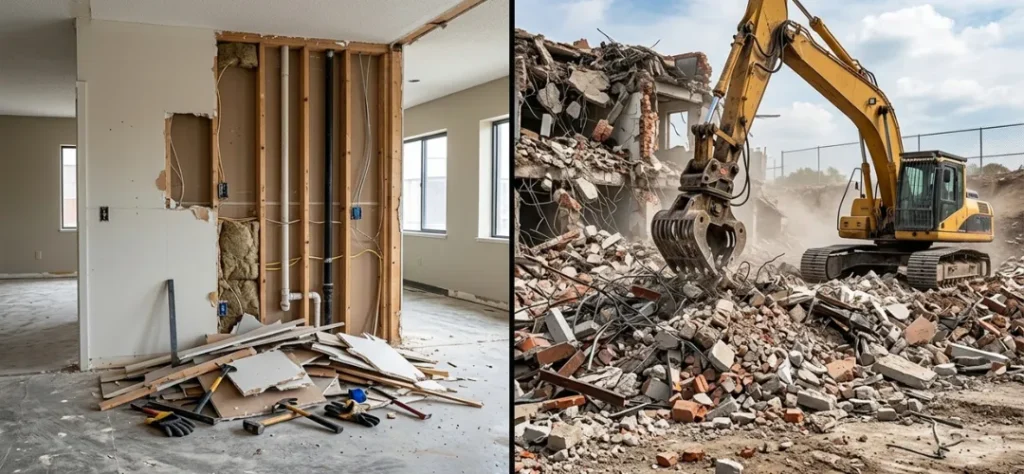
This is the scalpel approach. You remove specific parts of a building while leaving the rest completely intact. Think kitchen remodels where cabinets and counters come out but the walls stay up. Or bathroom upgrades where the tile floor gets torn up but the shower remains. What counts as light demolition includes tearing out drywall, flooring, fixtures, non load bearing walls, and outdoor structures like decks or sheds. The key word is selective. You choose what goes and what stays.
This is the wrecking ball approach. Everything comes down. Walls, roof, floors, foundation, sometimes even the driveway. Partial demolition vs complete demolition is the real question here. Complete demolition leaves an empty lot with nothing left but dirt. But you only need this if you are rebuilding from scratch or the existing structure is unsafe beyond repair.
For most homeowners, selective demolition is the right answer. You get the renovation you want without losing the parts of your home that still work.
Now that you know what each method means, let us put them side by side. These five differences will decide which route makes sense for your wallet, your timeline, and your sanity.
Light demolition removes specific areas. A single wall. One room. A deck in the backyard. The rest of the house keeps standing. Full scale demolition removes everything. Every wall, every floor, every pipe. Nothing remains but dirt and memories. If you are renovating, you almost always want the first option.
For light demolition work, expect handheld tools. Sledgehammers, crowbars, reciprocating saws, maybe a small skid steer if the space allows. It is manual, precise, and relatively quiet. Full demolition brings in the big guns, like hydraulic excavators, wrecking balls, cranes, and sometimes explosives. You will hear it from three blocks away.
Here is the question everyone asks. How much does light demolition cost compared to full demolition? Light demolition is almost always cheaper upfront. Less equipment, less labor, less waste to haul away. Full demolition costs more overall, but the price per square foot can sometimes be lower because you are tearing down everything at once rather than picking apart specific sections.
Project Type | Typical Cost Range | What Is Included |
Light demolition (kitchen) | $1,000 to $4,000 | Cabinets, counters, flooring, non load bearing walls |
Light demolition (bathroom) | $800 to $2,500 | Tile, vanity, tub, fixtures |
Full demolition (single family home) | $5,000 to $15,000 | Entire structure, foundation, debris hauling |
Do you need permits for light demolition? Sometimes yes, sometimes no. Removing interior drywall or old cabinets usually does not require a permit. Taking down a load bearing wall or touching electrical or plumbing definitely does. Demolition permits and regulations vary by city, so check with your local building department before you start swinging. Full demolition always requires permits, plus utility disconnections, asbestos inspections, and sometimes neighborhood notifications.
How long does full demolition take? A typical single family home can come down in one to three days with the right equipment. But cleanup and debris hauling add another week. Light demolition work takes longer in terms of hours per square foot because it is manual, but the overall project moves faster since you are not rebuilding from scratch. Debris removal after demolition is another factor. Light demolition creates manageable piles that fit in a dumpster or truck. Full demolition creates mountains that require multiple containers and heavy hauling equipment.
The sustainability edge goes to light demolition. Because you remove things by hand, you can salvage cabinets, fixtures, and lumber for reuse or donation. Full demolition sends most materials straight to the landfill, though concrete and steel can still be recycled.
You have seen the differences. Now let us make the call. Which method actually fits your situation?
You are remodeling a kitchen, bathroom, or basement. You need to remove old cabinets, flooring, or drywall. You have a shed, deck, or fence that needs to come down. You are clearing out a property before a renovation. Your building is structurally sound but outdated. You want to stay in your home during the work. In almost every residential scenario, light demolition services are the answer. You get the improvement without losing the whole house.
Your building is unsafe. Think fire damage, severe mold, foundation failure, or years of neglect. You are tearing down everything to build something completely new. You need total site clearance for a new construction project. You have already decided that nothing on the current property is worth saving.
Here is the honest truth. Most homeowners will never need full demolition. It is expensive, disruptive, and usually unnecessary for standard remodels. What is the difference between light demolition and full demolition ultimately comes down to one question. Are you improving what exists, or erasing it to start over?
For the majority of kitchen updates, bathroom gut jobs, flooring replacements, and property cleanouts, light demolition contractors and light demolition and hauling teams can handle everything efficiently. You save money, keep your home livable, and avoid the headache of a complete tear down.
If you are still unsure, walk through your property and ask yourself. Does this space have good bones that just need updating? Or is it beyond saving? That answer tells you everything.
Not sure where to start or what actually needs to come down? At Rivas Rubbish Removal, we specialize in light demolition services for sheds, fences, old decks, and pre renovation cleanouts. You dream up the new space. We clear out the old one.
Reach out to Rivas Rubbish Removal today for fast, reliable, and eco-friendly rubbish removal services. We’ll help you clear your space efficiently while ensuring sustainable practices for a cleaner, greener environment.
Have questions or need assistance? Our team is here to help – don’t hesitate to reach out.